
Did you know? Nearly 60% of travelers over 50 admit to missing out on their dream vacation due to unexpected visa issues. For many older travelers, navigating the maze of Southeast Asia visa requirements can feel overwhelming—but it doesn’t have to be. This comprehensive guide breaks down country-specific rules, secret hacks, and need-to-know entry requirements, so you can confidently plan your retirement dream trip or that extended Southeast Asian adventure without last-minute surprises.

Why Understanding Southeast Asia Visa Requirements is Crucial for Older Travelers
Southeast Asia is a magnet for retirees and travelers over 50, offering vibrant culture, world-class healthcare, and a warm climate all year round. However, visa requirements for this region are notoriously nuanced and frequently change, often catching even seasoned travelers off-guard. The difference between a seamless vacation and a travel headache can hinge on understanding visa exemptions, knowing whether you require a visa to enter, or being aware if your valid passport has enough pages and validity. With major changes to entry requirements following global health updates since 2023, and country-specific rules for older travelers, being informed is no longer optional—it’s essential.
Older travelers in particular must consider mobility, extended stays, and health-related documentation that younger backpackers may not face. Whether planning a short stay in Thailand or a multi-month journey through Vietnam, Malaysia, and Indonesia, every traveler should know the basics—and the hacks—behind tourist visas, visa costs, and how to optimize border crossings. Ignore the details and you risk delays at international airports, surprise application fees, or even entry denial. Get prepared, and Southeast Asia opens its doors wide.
“Nearly 60% of travelers over 50 admit to missing out on their dream vacation due to unexpected visa issues.”

How Southeast Asia Visa Requirements Differ from East Asia
Understanding the difference between Southeast Asia and East Asia visa requirements is essential for trip planning. While East Asia (think China, Japan, and South Korea) often requires travelers to obtain a visa in advance—with lengthy paperwork, embassy visits, and set appointment schedules—Southeast Asia tends to be more flexible. In countries like Thailand and Indonesia, you may enjoy visa exemption periods or quick visa on arrival processes. Still, don’t mistake convenience for uniformity: each Southeast Asian country has unique rules, especially for retirees or those wanting to stay longer.
For example, East Asian destinations rarely offer long-term retiree visas, while Southeast Asian countries like Malaysia and Thailand actually have specially tailored visa categories for older visitors. Additionally, tourist visa requirements and valid passport standards (minimum six-month validity!) are commonly enforced. The process for American, European, or South African passport holders will greatly differ across both regions—so double-check those country-specific details before you book your flight.
What You’ll Learn About Southeast Asia Visa Requirements
- Key tourist visa rules by country in Southeast Asia
- Secret hacks for avoiding visa headaches (especially for 50+ travelers)
- Costs, exemptions, and unique entry requirements
- Real-life advice validated by travel professionals
Southeast Asia Visa Requirements Overview
Types of Tourist Visas in Southeast Asia
Southeast Asian countries offer a range of visa options. The most common are visa exemption, visa on arrival (VOA), electronic visas (e-visa), and standard tourist visas obtained from an embassy or consulate. Visa exemption means you don’t require a visa to enter for a short stay, typically 14–90 days, depending on your country of citizenship. If you’re staying longer or not eligible for exemption, a VOA is issued at the airport or border crossing with a quick application and payment—handy for spontaneous trips but sometimes restricted in duration or number of entries.
Many countries, including Vietnam and Laos, offer e-visas for simple online application and pre-approval, minimizing the paperwork during your travels. For those planning extended stays or multiple re-entries, a standard tourist visa via embassy—in single entry or multiple entry format—remains the safest bet. Always check your valid passport requirements (usually at least six months remaining), proof of onward travel, and whether your nationality is eligible for specific visa categories. For retirees, both Thailand and Malaysia offer dedicated long-term visas—an appealing option for those wanting to make Southeast Asia a seasonal home.
Common Tourist Visa Requirements and Valid Passport Rules
Most countries in Southeast Asia impose a standard set of entry requirements for tourist visas, but details can quickly trip up unwary travelers. Requirements typically include a valid passport with at least six months of remaining validity, a completed arrival card, proof of onward travel (like a return ticket), evidence of accommodations or funds, and sometimes a recent passport photo. Some countries also require digital e-visa approval or hardcopy documentation to be shown at the border. Be aware that a valid passport is a universal non-negotiable—attempting entry with less than six months or damaged pages may result in refusal or a costly detour to your embassy.
Visa cost and allowable stay also vary widely—from visa-exempt stays of 14–90 days to visa on arrival fees ranging from $20 to $60USD. Ensure you bring enough cash (often in US dollars), as some smaller border crossings or airports may not accept cards. Medical insurance and vaccination documents are increasingly common since 2023, especially for older travelers or those planning longer visits. Consulting with a travel advisor specializing in Southeast Asian entry requirements can help avoid last-minute stress and ensure smooth border crossings every leg of your journey.
| Country | Visa Free Duration | Visa on Arrival | E-Visa | Standard Tourist Visa | Average Visa Cost (USD) | Retiree Options |
|---|---|---|---|---|---|---|
| Thailand | 30 days | Yes ($30-60) | Yes | Yes | $30 | Retirement Visa (O-A/O-X) |
| Vietnam | 15–45 days (selected countries) | No | Yes ($25+) | Yes | $25 | Investor/Retirement Options |
| Malaysia | 90 days | No | Yes (limited) | Yes | Free/$20 | Malaysia My Second Home (MM2H) |
| Singapore | 30–90 days | No | Yes (limited) | Yes | Free | No retiree visa, easy entry |
| Indonesia | 30 days | Yes ($35+) | Yes | Yes | $35 | Retirement KITAS Visa |
| Cambodia | 30 days | Yes ($30+) | Yes | Yes | $30 | Easy renewals |
| Laos | 15–30 days | Yes ($30+) | Yes | Yes | $30 | Long-term tourist extensions |
| The Philippines | 30 days | No | No | Yes | Free/$35+ | SRRV Retirement Visa |
Visa Cost: What to Budget for Your Southeast Asia Adventure
One of the keys to a smooth travel experience is understanding visa cost across your planned destinations. Most Southeast Asian countries keep fees reasonable, but multiple entries, express applications, or long-stay visas can add up quickly. For shorter stints under visa-exempt rules, you’ll often pay nothing. However, visa on arrival and embassy-issued tourist visas typically cost between $20 and $60 USD, payable in local currency or US dollars. E-visa fees are similar but sometimes come with extra processing or technology charges.
If you’re a retiree looking to stay longer, expect retirement or long-stay visa cost to be much higher—ranging from $100 (for basic extensions) to upwards of $1,000 for “second home” programs in Malaysia or the Philippines. Some of these visas require proof of pension income or bank deposits. Always factor in hidden expenses for document translation, courier services (when applying through an embassy or consulate), or travel insurance if it is a country-specific entry requirement. Pro tip: Budget at least 10% extra for unexpected fees, especially if traveling during peak tourism periods or through smaller, less automated border crossings.

Visa Exempt vs. Visa on Arrival: Which Option for Southeast Asia?
Not all visas are created equal, and your choice will influence both your travel experience and your budget. Visa exempt status is the gold standard for simplicity: enter, get your passport stamped, and go. Countries offering visa exemption include Thailand (for up to 30 days), Malaysia (90 days), and Singapore (30–90 days), primarily for Western passport holders. However, rules change frequently and may depend on your nationality. For stays longer than the exemption period, or if you’re not eligible, a visa on arrival (VOA) is the next best thing—available at major international airports and land borders throughout the region.
The downside to the VOA is limited flexibility: stays are shorter (usually 15–30 days), single entry only, and renewals can mean exit and re-entry. Cash-only payments and required documentation—like passport photos, proof of return flights, and the right currency—can add last-minute stress. If you anticipate multiple border crossings, consider applying for an e-visa or regular tourist visa before you leave home. Note: Frequent travelers often combine visa exempt entries with VOA or e-visa for a flexible, cost-effective Southeast Asian circuit.
Tourist Visa Requirements by Country in Southeast Asia
Thailand: Tourist Visa, E-Visa, and Visa Exemption Insights
Thailand is one of the most tourist-friendly countries in Southeast Asia, offering visa exemption to over 60 nationalities—including US, UK, Canada, Australia, and most EU countries—for stays up to 30 days (with possible single extension by 30 days). If you need to stay longer, you have several options: e-visa (apply online for up to 60 days), tourist visa via embassy/consulate (single entry, 60 days, extendable), and visa on arrival (15–30 days for select nationalities).
Retirees enjoy the exclusive Non-Immigrant “O-A” (1-year) or “O-X” (5-year) Long Stay Retirement Visa—but must meet health insurance and financial proof requirements. Bring a valid passport (six months minimum), onward ticket, and recent photo. Pro tip: Multiple international airports let you re-enter quickly using back-to-back visa exemptions or visa runs—a popular hack for digital nomads and retirees, though enforcement is tightening.
Vietnam: How to Apply for a Visa and Entry Requirements
Vietnam’s visa policy has evolved, making it more accessible for tourists and retirees, but knowing the latest rules is critical. US, UK, and many EU citizens enjoy visa exemption for 15–45 days (country-dependent). For longer stays, Vietnam’s e-visa system allows application from anywhere online—valid for 30, 60, or 90 days, single or multiple entry. Ensure your valid passport meets the six-month rule, and print your approval letter to present at the border. There is no typical visa on arrival for most nationalities anymore unless pre-arranged (business or group travel). Embassy tourist visas allow for extended stays, but require a bit more planning and paperwork.
Short stays or extensions must be arranged in-country through agencies or visa offices. Be prepared for changing entry requirements and bring proof of onward travel, especially if arriving by land. Retirees may need to apply under business or investor categories, as Vietnam doesn’t issue specific retirement visas. Visa fees vary, so budget $25–$50 USD and watch out for service charges if using an online agency.
Malaysia: Visa to Enter, Exemptions, and Tips for Older Travelers
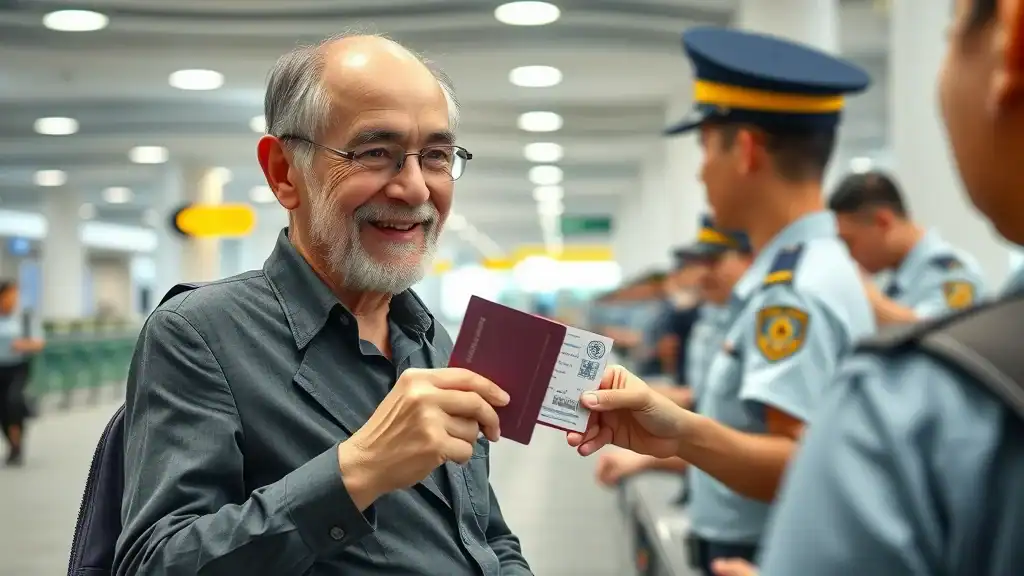
Malaysia is famous for its generous 90-day visa exemption for Europeans, US, UK, Australian, and many other passport holders. There are no visa on arrival options for these nationalities; longer visits or multiple entries require obtaining a tourist visa from an embassy or consulate. The “Malaysia My Second Home” (MM2H) program is designed for retirees and long-stayers—with attractive terms, though recent changes mean proof of higher income and bank deposits.
Entry requirements are straightforward: show a valid passport (six months remaining), completed arrival card, proof of accommodation, and sometimes proof of onward travel. Medical checks and health insurance documentation are increasingly requested at major international airports—particularly relevant for older travelers. Malaysia also offers some of Southeast Asia’s best health infrastructure, making it a popular “base” for retirees who wish to explore the region.
Singapore: Tourist Visa, Passport Holders, and Senior-Friendly Entry Rules
Singapore is among the easiest Southeast Asian destinations for international travelers, consistently ranking high for border efficiency. Visa exemption applies to US, UK, EU, Australia, Canada, and many others—allowing stays of 30–90 days. There are few retiree-specific schemes, but relaxed entry requirements and fast-track lanes for senior travelers add to its appeal. If you do require a visa (certain African, South Asian, or Middle Eastern passport holders), the process is efficient but must be started through a Singaporean sponsor or approved agency.
Make sure your valid passport is in top shape and bring an onward or return flight. Singapore strictly enforces entry requirements—such as clean passport pages and return/onward travel—even for those simply transiting through the international airport. If planning an extended circuit of Southeast Asia, Singapore’s connectivity makes it an ideal hub, especially with its senior-friendly airport services and medical facilities.
Indonesia: Visa on Arrival and Long-Stay Options for Retirees
Indonesia grants visa exemption for 30 days to travelers from over 160 countries, including the US, EU, Australia, and the UK. If you plan to stay longer or want more flexibility (single entry or multiple entry), opt for a visa on arrival at major international airports and land/sea borders for about $35 USD, extendable once for another 30 days without leaving the country. Digital e-visa options are also available for those who want to arrange things ahead of time.
Retirees seeking true long-term stays can apply for the Retirement KITAS visa, designed for those aged 55+, with straightforward (if somewhat bureaucratic) requirements—proof of income, local housing, and medical insurance. This visa opens doors to one of Southeast Asia’s most affordable and scenic retirement destinations. Always check your passport for the six-month rule and bring copies of key documents for smooth processing at border crossings or visa extensions.
Cambodia, Laos & The Philippines: Individual Visa Requirements
Each of these Southeast Asian gems handles tourist visa requirements a little differently. Cambodia offers both visa exemption for select ASEAN passport holders and a straightforward visa on arrival for most tourists ($30 USD, easy extension for a fee). Laos provides similar VOA and e-visa options for most Western passport holders, with “tourist visa runs” common for those wishing to stay longer without complex paperwork. The Philippines is unique, granting a 30-day visa exemption upon arrival to most nationalities, but also boasts the SRRV (Special Resident Retiree’s Visa) for older travelers—arguably the gold standard for flexibility in the region, though it requires proof of pension and a deposit.
All three countries enforce valid passport and onward travel requirements. Forms and fees can change rapidly, so it pays to check embassy guidance or consult travel advisors. For longer stays or retirement, these countries make it surprisingly easy for mature travelers to call Southeast Asia home, but paperwork and health checks should be prepared in advance.
| Country | Visa Free/Exempt | Visa on Arrival | E-Visa | Average Cost (USD) | Health/Insurance Needed | Long-Stay/Retiree Options |
|---|---|---|---|---|---|---|
| Thailand | Yes (30 days) | Yes | Yes | $30–$60 | Recommended for all, Required for retirees | O-A, O-X Non-Immigrant Visas |
| Vietnam | Yes (15–45 days, select) | No | Yes | $25–$50 | Yes (Post-COVID changes) | Investor visas (for retirees) |
| Malaysia | Yes (90 days) | No | Limited | Free/$20 | Required for MM2H | MM2H (Retiree Program) |
| Singapore | Yes (30–90 days) | No | Limited | Free | No, but recommended | No specific retiree visa |
| Indonesia | Yes (30 days) | Yes | Yes | $35–$65 | Yes, especially for long-stay | Retirement KITAS |
| Cambodia | No (except ASEAN) | Yes | Yes | $30 | No, but changing quickly | Easy extensions |
| Laos | No (except ASEAN) | Yes | Yes | $30 | Required for stays over 30 days | Tourist extensions possible |
| Philippines | Yes (30 days) | No | No | Free/$35+ | Needed for SRRV application | SRRV (Retiree Program) |

Age-Specific Advice: Southeast Asia Visa Requirements for Travelers Over 50
- Easier border crossings for retirees
- Potential senior discounts and health certificates
- Visa requirement variations based on age group
With age comes not only wisdom but sometimes special privileges in the form of streamlined visa requirements and entry processes. Southeast Asian countries like Thailand and Malaysia provide dedicated retirement visa categories and even fast-lane immigration at some airports for older travelers. Your age can unlock easier border crossings, and countries sometimes waive certain health checks for retirees. Always travel with documentation proving your age (passport), adequate travel insurance, and, where possible, medical certificates to streamline health-based entry checks.
Don’t forget to ask about potential senior discounts on visa application fees, tours, and even government fees. Some Southeast Asian embassies and consulates recognize age-based brackets (usually 50 or 55+) when assessing eligibility for long-stay programs. Staying up-to-date on the latest retirement visa policies—especially as post-pandemic rules shift toward health and financial self-sufficiency—can ensure you maximize your stay without unnecessary headaches.
“Thailand and Malaysia offer unique long-term visa pathways exclusively for foreign retirees.”

Hidden Travel Tips: Hacks for Navigating Southeast Asia Visa Requirements
- How to use multi-country visa runs efficiently
- Getting the most from visa on arrival for long stays
- Avoiding common rookie mistakes on tourist visas
Savvy older travelers use a blend of travel hacks to stretch each day on their visa. Multi-country “visa runs” involve traveling overland or by air to a neighboring country to reset your stay period—allowing you to maximize visa-exempt or VOA entries for weeks or months more than a standard visa. Popular routes include Thailand–Laos–Cambodia circuits, or Singapore–Malaysia–Indonesia hops. Plan your routes around the length and type of each country’s entry visa for extra flexibility. Note that excessive use of visa runs can trigger immigration scrutiny, so keep trips genuine and space them out.
For long stays, always opt for e-visa or embassy-issued tourist visas where possible, especially if you anticipate multiple border crossings or want to avoid situations at land borders lacking modern processing. Avoid rookie mistakes: always double-check valid passport dates, fill out your arrival card completely and legibly, never overstay your visa (fines are steep), and keep digital and hard copies of your documents. In many countries, retirees are less likely to attract unwanted attention, but presenting thorough documentation and respecting local rules will keep every border crossing smooth and stress-free.
“Savvy travelers maximize their trip by lining up visa-exempt entries with back-to-back country visits.”

East Asia vs. Southeast Asia Visa Requirements: What’s the Difference?
While Southeast Asia is known for its relatively accessible and tourist-friendly visa requirements, East Asia sets a different tone. Countries like China and Japan require pre-arranged tourist visas and sometimes sponsors or proof of business intent—even for short stays. Processing times can take up to two weeks or more, and documents must be submitted at regional embassies or consulates, with strict photo, application, and invitation standards. Conversely, in Southeast Asia, United States and European passport holders often enjoy visa exemption or straightforward arrival visas without lengthy lead times.
For travelers over 50, this means Southeast Asia represents a much easier destination for extended, spontaneous, or multi-country adventures. You rarely need to plan months ahead or worry about language-based embassy hurdles. However, both regions share the absolute requirement for a valid passport and clear onward travel plans. If you’ve found entry to East Asia cumbersome or costly, Southeast Asia offers a refreshing alternative—with dedicated retiree pathways to boot.
| Region | Typical Visa Policy | Processing Time | Entry Options | Retiree Pathways |
|---|---|---|---|---|
| Southeast Asia | Visa exemption/VOA/e-Visa for most | Immediate–3 days | Multiple: air, sea, land | Widely available |
| East Asia (China, Japan, South Korea) | Pre-arranged embassy consulate visa | 7-14+ business days | Air only (strict), occasional land | Rare, with strict investment/pension rules |
Frequently Overlooked Entry Requirements and Visa Rules
- Proof of onward travel and its impact on foreign passport holders
- Unexpected requirements for valid passport expiration dates
- Recent health and insurance prerequisites post-2023
Even experienced Southeast Asia travelers can slip up on the details. Proof of onward travel is now enforced at many airports, especially in Thailand, Indonesia, and Singapore. Not having a confirmed return or exit ticket can result in denied boarding at your original airport—or worse, refusal of entry upon arrival. Valid passport requirements go beyond just the six-month rule: some countries demand enough empty pages for new stamps, or won’t accept temporary, damaged, or extended passports. Make sure your travel documents are up-to-date and undamaged before you leave home.
Health requirements have shifted post-pandemic. Many countries require proof of COVID-19 vaccination, sometimes alongside travel or health insurance covering COVID-related treatment. This is especially emphasized for older travelers or those seeking long-stay or retirement visas. Requirements can change quickly—always double-check official embassy websites or consult travel professionals before departure. Applying these tips can prevent missed flights and hectic last-minute document scrambling on your next Southeast Asia journey.
Visual learners will appreciate this step-by-step walkthrough: from preparing passport scans and flight confirmations to filling out e-visa applications and organizing paper backups. Learn what seasoned retirees do to keep paperwork fast, tidy, and ready for every leg of a Southeast Asia adventure.
People Also Ask: Southeast Asia Visa Requirements
Do Americans need a visa for Southeast Asia?
Most U.S. passport holders do not require a visa for short-term tourist visits (14–90 days), thanks to visa exemption policies in countries like Thailand, Malaysia, Singapore, Indonesia, and the Philippines. In Vietnam and certain other countries, an e-visa or visa on arrival is typically available for a modest fee. Always check each destination’s latest entry requirements before travel, as rules and eligible passport holders can change.
Do US citizens need a visa to enter Thailand?
U.S. citizens can enter Thailand visa-exempt for up to 30 days if arriving by air (15 days if by land or sea). For longer stays, a tourist visa is available from the Thai embassy or consulate, valid for 60 days and extendable. Retirement and long-stay visa options exist for those 50+, though these require health and income documentation.
Can I go to Thailand for 30 days without a visa and then get a 60 day tourist visa in Thailand?
Yes—many travelers enter Thailand under visa exemption (30 days) and can then extend their stay by visiting a local immigration office for a 30-day extension. If you wish to stay even longer, you must exit and apply for a 60-day tourist visa at a Thai embassy or consulate abroad—a process often referred to as a “visa run.” Immigration is increasingly strict, so always follow the rules closely.
Do US citizens need a visa for Vietnam?
U.S. passport holders are typically not eligible for visa exemption in Vietnam. However, you can apply for a visa easily using Vietnam’s e-visa portal—for stays up to 90 days (single or multiple entry). Ensure your valid passport meets the minimum validity, and print your e-visa approval before departure. Extensions can be managed inside Vietnam but require local support or agencies.
FAQs: Southeast Asia Visa Requirements
- How far in advance should I apply for a tourist visa?
It depends on your destination and nationality, but it’s smart to start the process 2–4 weeks before your trip. Visa on arrival or e-visa options often process within a few business days, while embassy or consulate applications may take up to two weeks during peak season. - Which Southeast Asia countries allow remote application for tourist visas?
Vietnam, Cambodia, Laos, Myanmar, and Indonesia all offer e-visa systems or allow tourist visa applications online from abroad. Thailand now also offers e-visa applications for select nationalities. - Can retirees apply for long-stay or retirement visas?
Absolutely. Thailand, Malaysia, Indonesia, and the Philippines all provide special long-stay or retirement visa options for travelers over 50, with varying financial and health documentation requirements.
From overlooking new health certificate prerequisites to underestimating visa processing times, see the most common pitfalls retirees and mature travelers face—and how to avoid them for a worry-free adventure.
Key Takeaways: Simplifying Southeast Asia Visa Requirements for Travelers Over 50
- Most Southeast Asia nations offer visa exemptions or simple tourist visas
- Check specific visa requirements for each destination and your passport
- Older travelers can access special long-stay and retirement visa options
- Prepare documentation and entry requirements before departure
- Always verify costs and application channels to avoid last-minute surprises
Need Help? Get Customized Advice on Southeast Asia Visa Requirements
“Email us at kevin@southeastasiainsider.com for help with your next Asia Adventure.”
Conclusion
Be prepared, know your visa requirements, and Southeast Asia will welcome you with open arms. Safe travels!